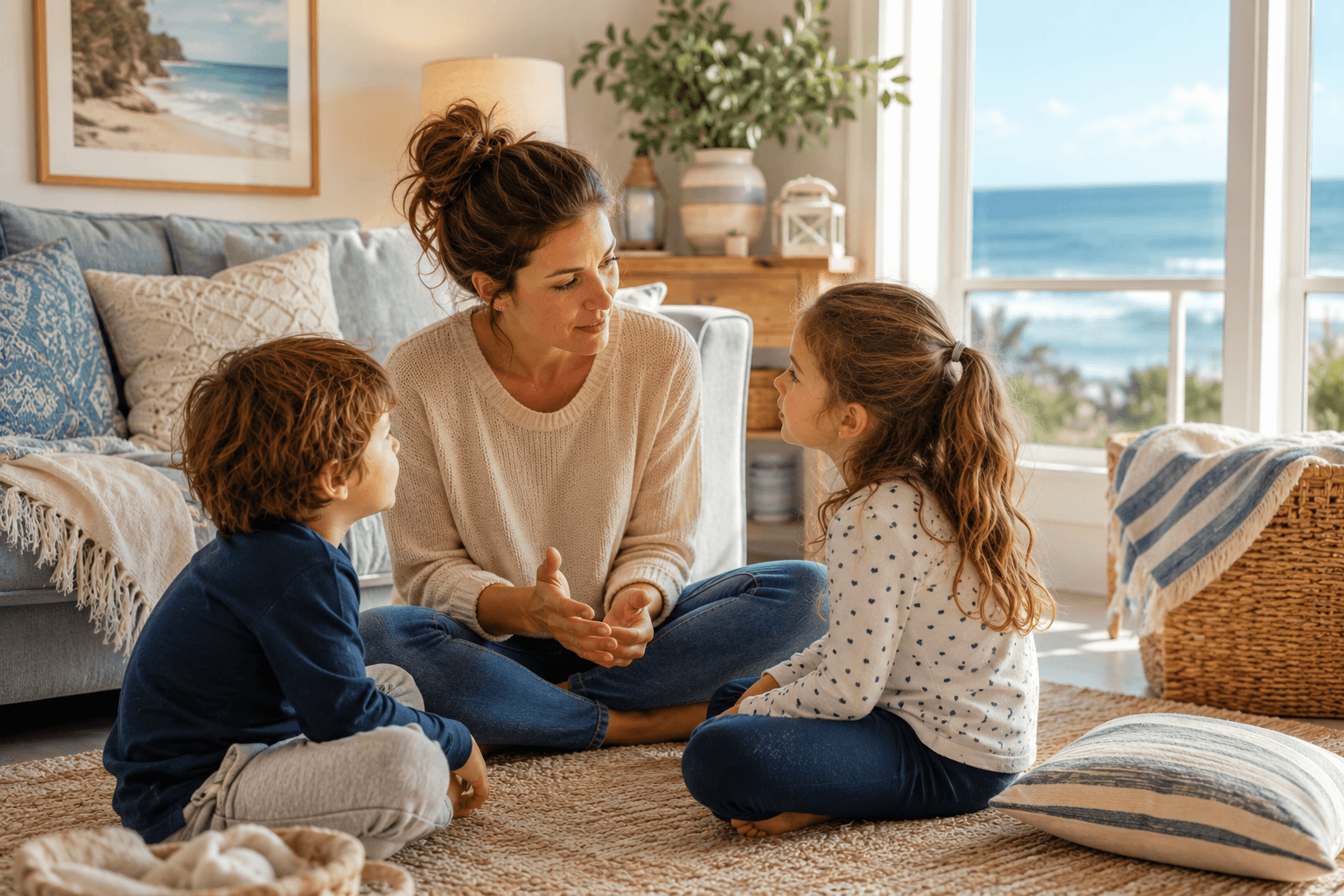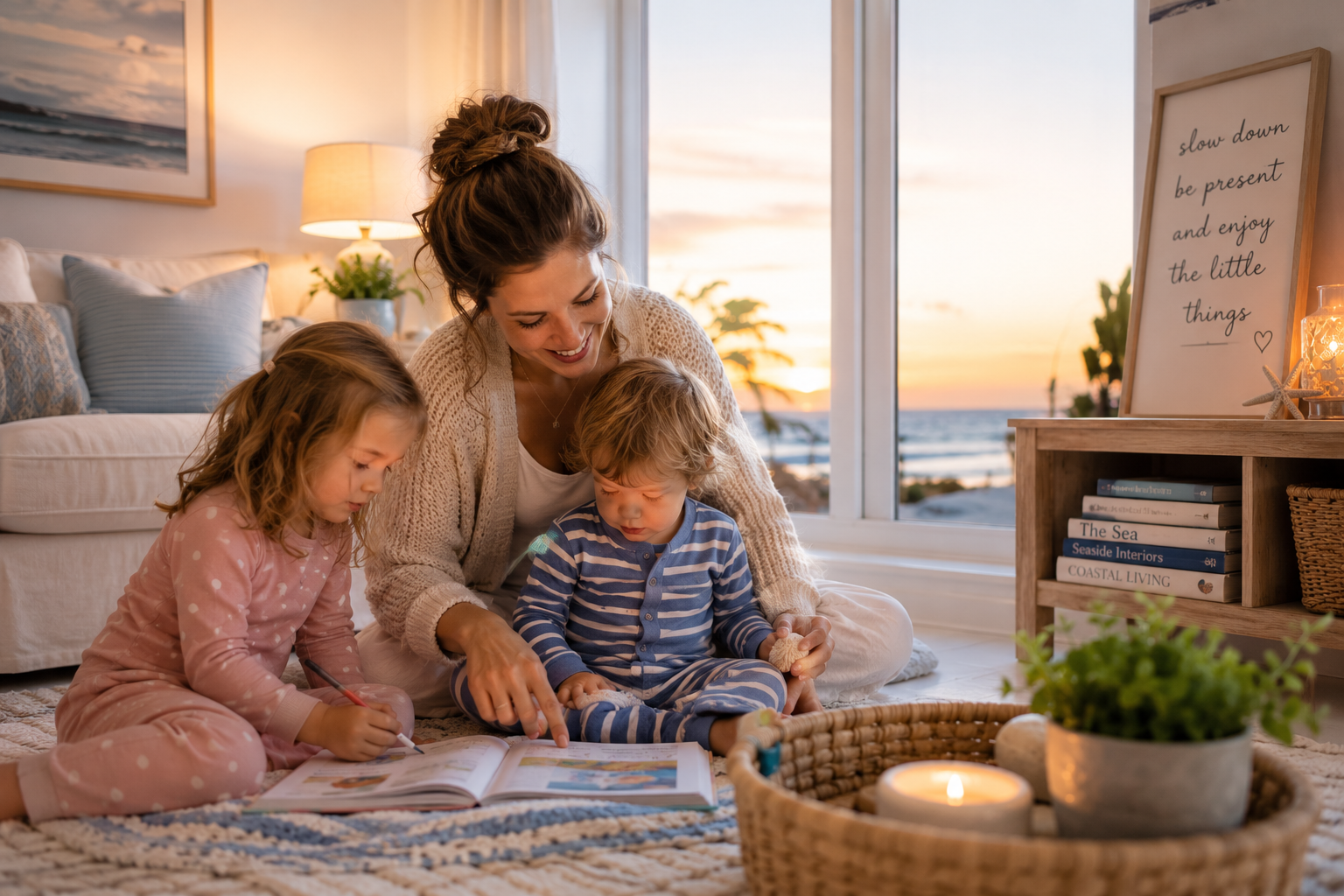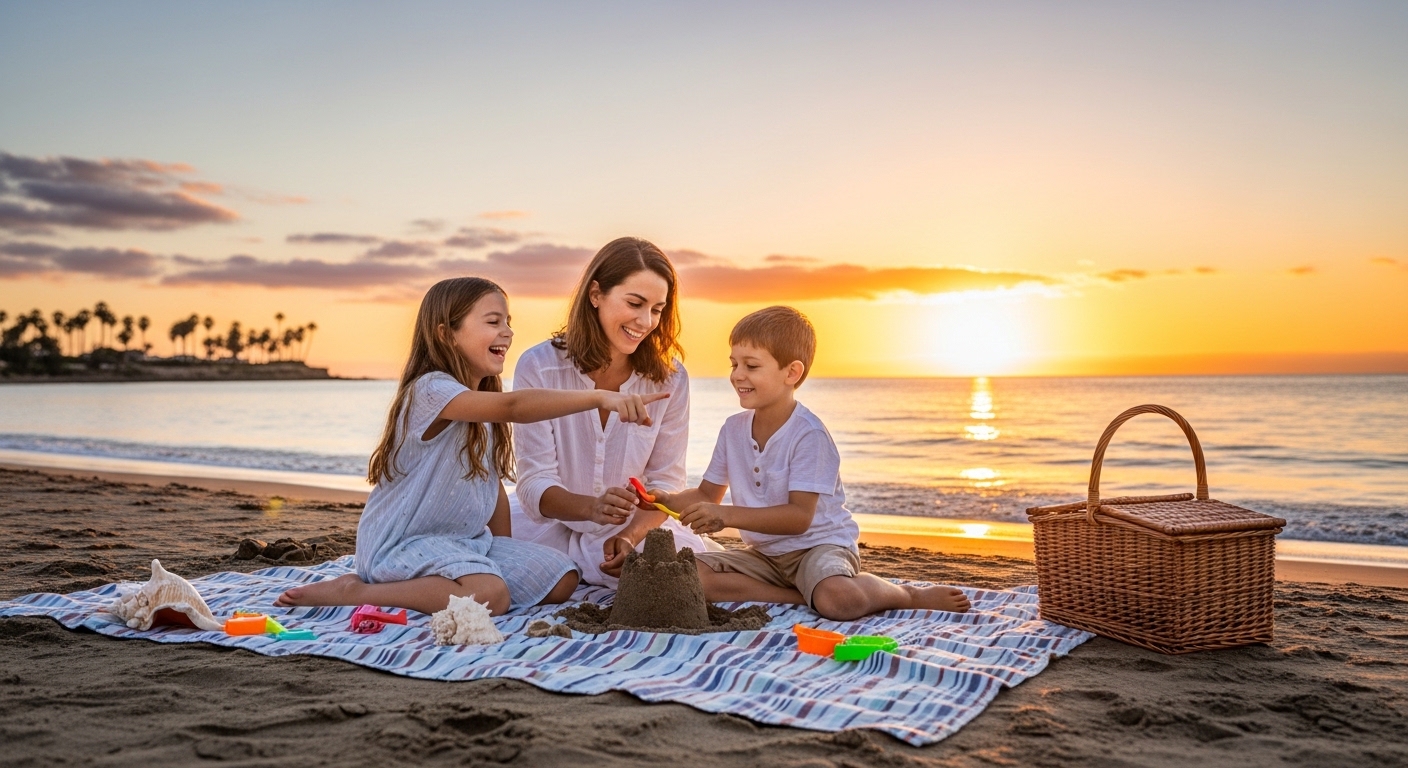
Independent play without screens has become more valuable for modern families as digital devices continue to dominate everyday life. Many moms want their children to enjoy creativity, problem-solving, and self-directed play without depending on tablets, phones, or television for entertainment. The good news is that independent play is something children can learn naturally with the right environment, routines, and encouragement.
Kids do not need constant stimulation to stay engaged. In fact, quiet moments often help children build imagination, emotional confidence, and focus. Independent play may also give moms small pockets of time to rest, reset, cook dinner, answer emails, or simply breathe without feeling guilty.
If your family is already working toward calmer routines, you may also enjoy reading Digital Detox for Moms and Kids in a Coastal Lifestyle, Coastal Morning Routines for Moms, and Mindful Motherhood by the Sea for more ideas that support balanced family life.
Why Independent Play Matters for Kids
Independent play supports more than simple entertainment. It helps children develop confidence, patience, creativity, and problem-solving skills. When kids learn how to play on their own, they become more comfortable exploring ideas without needing constant direction from adults.
According to Harvard University’s Center on the Developing Child, unstructured play supports healthy brain development and emotional growth. Independent play may also help children practice decision-making and emotional regulation in a natural way.
For moms, encouraging independent play may reduce pressure to constantly entertain children throughout the day. It creates a healthier rhythm where kids learn how to engage themselves while still feeling secure and supported.
Signs Your Child May Depend Too Much on Screens
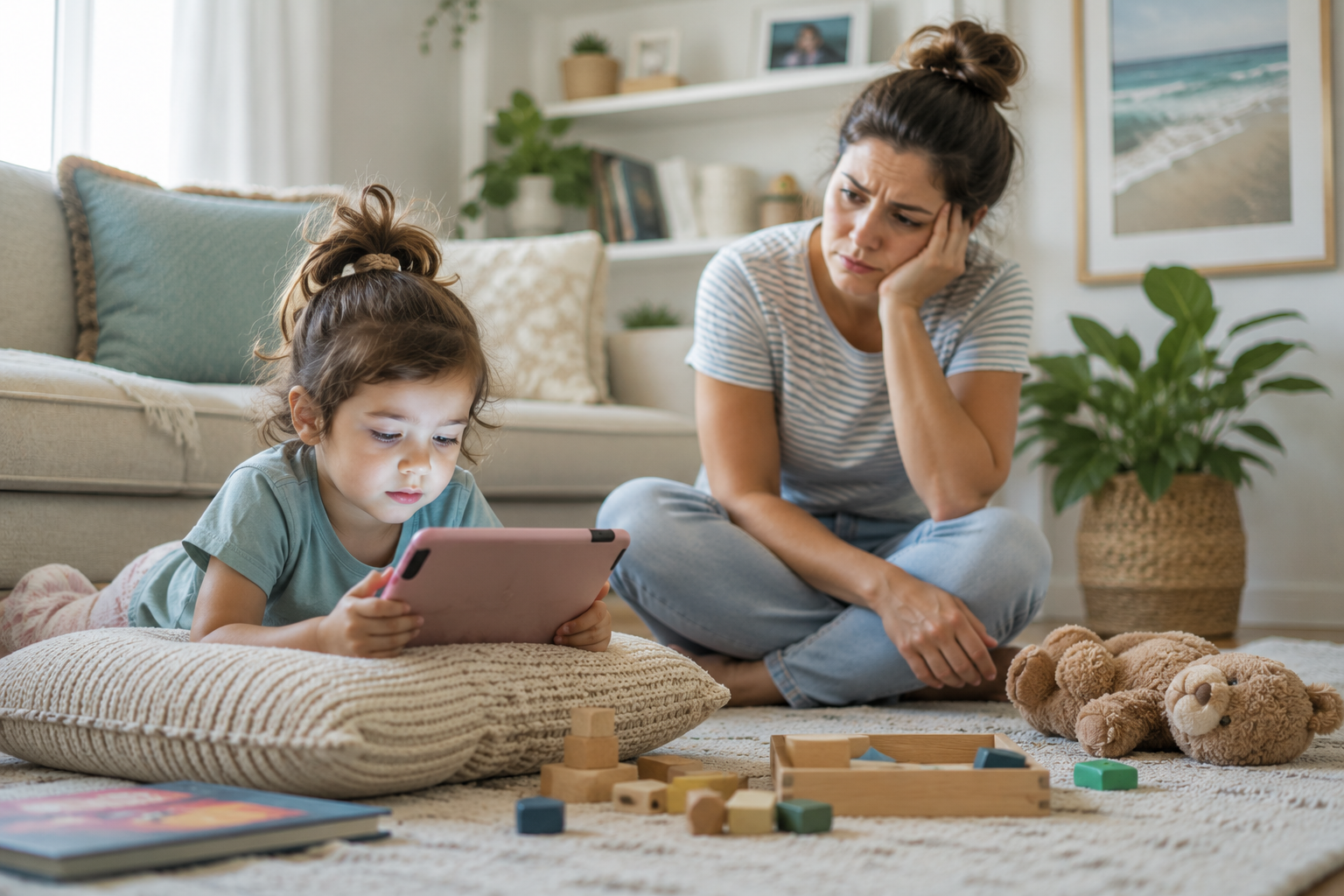
Technology is part of modern life, but some children begin relying on screens as their primary source of stimulation. This may make independent play feel more difficult at first.
Common Signs Include:
- Kids quickly say they are bored without a device
- Short attention spans during toys or creative activities
- Difficulty playing alone for even a few minutes
- Frustration when screens are removed
- Constant requests for television or tablets during downtime
These habits do not mean anything is wrong. They simply suggest that independent play skills may need gentle encouragement and consistency.
Create an Environment That Encourages Independent Play
The environment inside your home plays a major role in whether kids naturally engage in play. Children are more likely to explore independently when toys and activities feel accessible, organized, and inviting.
Keep Toys Visible and Simple
Too many toys at once may overwhelm children. Try rotating toys every few weeks instead of leaving everything available all the time. Baskets, open shelves, and small activity stations may help kids focus more easily.
Choose Open-Ended Toys
Open-ended toys encourage creativity because they can be used in many different ways. Examples include:
- Building blocks
- Magnetic tiles
- Dolls and figurines
- Play kitchens
- Art supplies
- Puzzles
- Dress-up clothes
Resources from The National Association for the Education of Young Children explain how open-ended play supports imagination and early learning.
Create Calm Play Spaces
A quiet and comfortable area often helps children stay engaged longer. Natural light, cozy rugs, floor pillows, and low clutter may create a more inviting atmosphere for independent play.
How to Start Independent Play Slowly
Some children may struggle with independent play at first, especially if they are used to constant interaction or screen stimulation. Start slowly and build confidence over time.
Begin With Short Periods
Start with just ten or fifteen minutes of solo play while staying nearby. As children become more comfortable, you can gradually increase the time.
Stay Calm and Consistent
If children immediately say they are bored, avoid rushing to solve the problem. Sometimes boredom is the beginning of creativity.
Use Predictable Daily Routines
Children often respond well to routines because they know what to expect. Independent play may work best during the same part of the day consistently.
Families who enjoy calm routines may also like How to Make Time for Yourself as a Busy Mom, since small moments of independent play may help moms recharge too.
Screen-Free Activities That Encourage Independent Play
Children often stay engaged longer when activities feel creative and hands-on rather than overly structured.
Creative Art Stations
Simple supplies like crayons, markers, paper, stickers, glue sticks, and washable paint can encourage long stretches of creativity.
Building Challenges
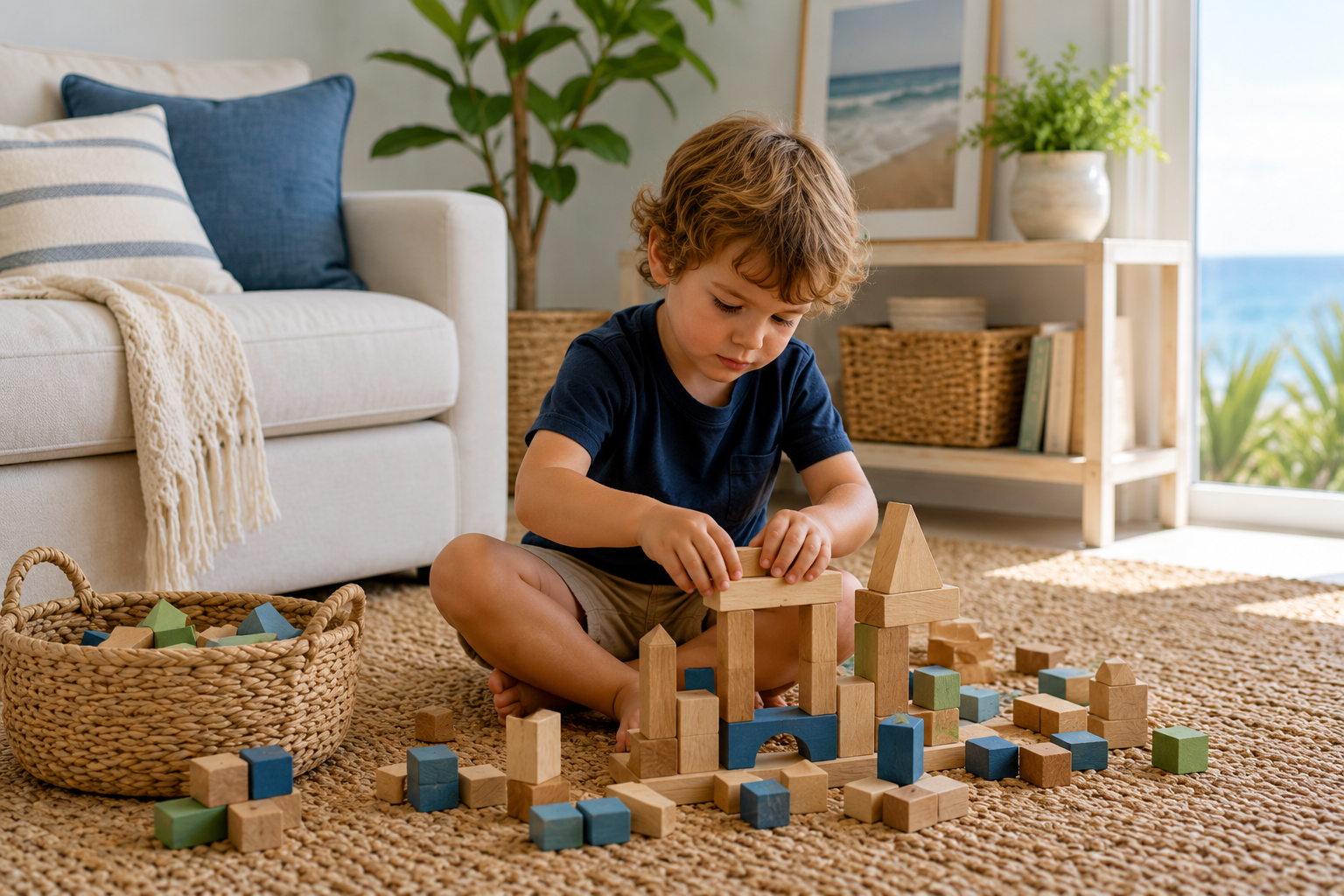
Ask children to build a tower, a pretend city, or a bridge using blocks or recycled materials.
Pretend Play
Pretend kitchens, toy stores, puppet shows, and dress-up games encourage storytelling and imagination.
Reading Corners
A cozy reading area with rotating books may encourage quiet independent time. The reading experts at Reading Rockets provide helpful guidance on encouraging children to enjoy books.
Outdoor Play Supports Independence Too
Outdoor environments naturally encourage exploration and independent thinking. Kids often become more creative when given space to move freely.
Backyard Exploration
Simple outdoor activities like collecting rocks, digging, watering plants, or drawing with sidewalk chalk may hold attention longer than expected.
Coastal Nature Walks
Families near the beach can encourage shell collecting, tide observations, or simple scavenger hunts.
You may also enjoy connecting this topic with Beach Day Essentials: A Mom’s Guide to Stress-Free Coastal Outings and Beach Safety for Kids.
Gardening Activities
Simple gardening tasks help children slow down and focus. Watering plants or digging in soil may become calming sensory experiences.
How Moms Benefit From Independent Play
Independent play is not only beneficial for children. It may also support maternal well-being. Many moms feel pressure to constantly entertain, teach, and engage their kids throughout the day. Independent play creates breathing room without relying on screens.
Even short periods of independent play may help moms:
- Prepare meals more peacefully
- Reduce mental overload
- Complete small household tasks
- Enjoy moments of rest
- Feel less overstimulated
Parents looking for healthier daily balance may also appreciate information from Psychology Today regarding child development, emotional regulation, and modern parenting habits.
Common Mistakes to Avoid
Interrupting Too Often
If children are deeply engaged in play, try not to interrupt unnecessarily. Independent focus grows when kids remain immersed in their ideas.
Expecting Too Much Too Soon
Independent play is a skill that develops gradually. Younger children especially may need shorter periods at first.
Using Screens as the Default Solution
Screens may feel convenient during stressful moments, but relying on them too often may make boredom tolerance harder over time.
Final Thoughts
Encouraging independent play without screens does not require expensive toys or complicated schedules. Often, the simplest routines create the biggest impact. A calm environment, open-ended activities, and consistent habits may help children become more creative, focused, and confident over time.
Independent play also supports healthier family balance. Kids gain space to imagine and explore while moms gain small moments to reset and breathe. Over time, these small changes may help create a calmer and more connected home environment.
For more parenting and wellness inspiration, continue exploring Seaside Moms Blog, browse the Mom Life section, or visit Family Life and Wellness for related topics.