If you’ve been on parenting TikTok lately, you’ve probably seen the “analog bag” trend: a grab-and-go stash of screen-free activities that keeps kids busy without a phone or tablet. It’s trending because it solves a real problem—kids get bored fast, parents get exhausted, and screens become the default. The good news? The concept is solid. The bad news? Most “analog bag” lists aren’t built for real beach days (sand, wind, wet hands, snack chaos, and meltdowns).
So here’s the coastal version that actually works: the analog beach bag. Think of it as a simple system that replaces “can I have your phone?” with “pick an activity pouch.” It’s not about being perfect or anti-tech. It’s about giving your family a better default when you’re trying to enjoy the sea.
Why “analog” is trending in 2026 (and why it works for beach days)
Parents are pushing back against always-on screens and algorithm-driven content. At the same time, 2026 parenting trends are leaning into real-world adventure, offline learning, and nature-based play. Beach days naturally fit that shift—movement, sensory input, and curiosity are already built in. :contentReference[oaicite:1]{index=1}
And here’s the secret: an analog bag works because it removes decision fatigue. Kids don’t need you to invent entertainment on the spot. They just need choices that are ready, clean, and easy.
The rule: build your bag in “pouches,” not loose chaos
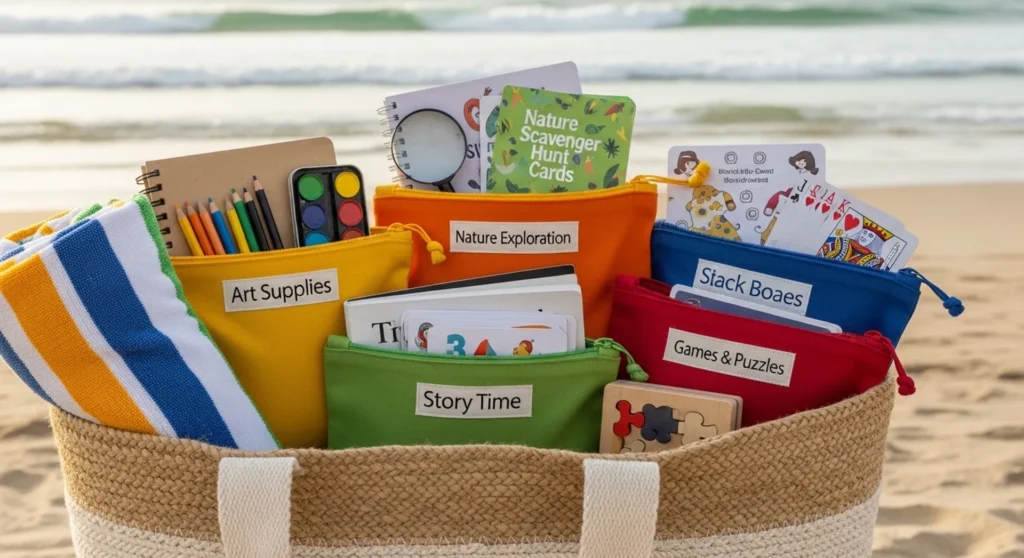
The biggest mistake is throwing random toys in a bag and hoping for the best. Instead, use 4–6 zip pouches (or gallon zip bags) and label them:
- Create (art + making)
- Build (construction + puzzles)
- Explore (nature + scavenger hunts)
- Calm (quiet tools for resets)
- Game (quick games for siblings/friends)
When a child asks for a screen, you don’t debate. You say: “Pick a pouch.” That’s it.
Analog Beach Bag Packing List (the realistic essentials)
1) The beach basics (you already know these)
If you want the full coastal checklist, link this to your on-site guide:
Beach Day Essentials: A Mom’s Guide to Stress-Free Coastal Outings.
- Sunscreen + after-sun
- Water + snacks
- Towels + shade
- Extra clothes (yes, always)
2) The “analog” core (choose based on age)
Toddlers (2–4): low mess, big sensory payoff
- Water-reveal painting book (no sand-sticky markers)
- Chunky crayons + mini notebook
- Sticker sheets (repositionable if possible)
- Animal/vehicle figurines (5–8 pieces max)
- Stacking cups (also double as sand tools)
Kids (5–8): “missions” beat “toys”
- Beach scavenger hunt cards (laminated or in a sleeve)
- Mini building set (magnetic tiles mini, micro blocks, etc.)
- Water-wow or paint-with-water pad
- Small puzzle book (mazes, spot-the-difference)
- Uno-style card game (simple rules, fast rounds)
Tweens (9–12): give them dignity + autonomy
- Sketchbook + pencil + fineliner (in a hard case)
- Photography “challenge list” (no phone required if they have a basic camera)
- Brain teasers (mini IQ puzzles, logic puzzles)
- Conversation prompt cards (yes, they roll their eyes… then they talk)
- One small “maker” project (bracelet kit, embroidery card, etc.)
Beach-friendly screen-free activities you can start in 60 seconds
1) The Seaside Scavenger Hunt (the MVP)
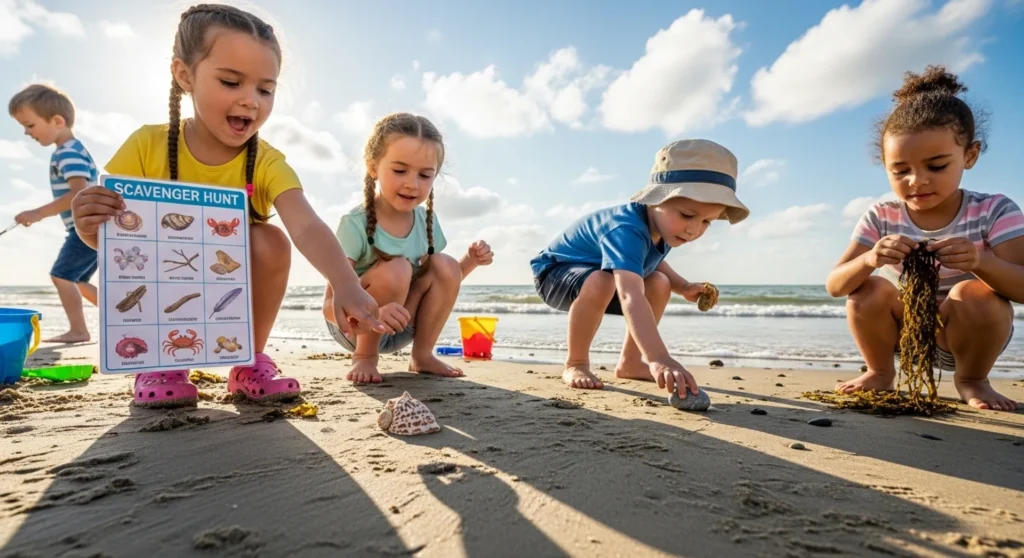
Make a list that matches your beach:
- Something smooth (stone)
- Something that floats (driftwood)
- Three shell shapes
- A feather or seaweed
- A “treasure” photo pose (like a heart in the sand)
Bonus: turn it into a “team vs team” challenge. Kids forget screens exist when there’s a mission.
2) Shell sorting (quiet, focused, surprisingly calming)
Give them a small container and sorting prompts:
- Sort by size
- Sort by pattern
- Build a mandala design
3) “Beach lab” mini science
- What sinks vs floats?
- Which sand is warmer—shade or sun?
- How long does a footprint last near the waves?
If you want a craft follow-up that pairs perfectly with the analog theme, link this:
DIY Beach Crafts: Fun Projects for Moms and Kids.
The Calm Pouch: how you prevent beach meltdowns from becoming screen negotiations
The Calm Pouch is what makes your analog beach bag actually work. It’s not a “punishment.” It’s a reset.
- One small sensory item (stress ball, textured strip, pop-it if your child uses it calmly)
- Headphones or ear defenders (wind + noise can overload some kids fast)
- Mini storybook or comic
- Snack you only use for resets (protein > sugar)
- Simple breathing card: “Smell the ocean, blow the candle” (3 rounds)
When a kid spirals, screens can feel like the fastest fix—but they often cause the next crash later. Calm tools teach regulation without handing over your phone.
How to introduce the “analog beach bag” without a fight
Step 1: set the rule before you arrive
Say it in one sentence: “Beach is analog time. You can pick an activity pouch whenever you want.”
Step 2: start easy
Day 1 isn’t about “no screens forever.” It’s about 60–90 minutes screen-free with good substitutes.
Step 3: rotate, don’t overload
Bring fewer items than you think. Choice is good; too much choice becomes chaos.
Back it up with a simple Family Media Plan (so you’re not winging it)
The American Academy of Pediatrics recommends families create a plan that sets boundaries like screen-free zones and protects sleep—because the goal is balance, not guilt. :contentReference[oaicite:2]{index=2}
Use this beach-friendly version:
- Screen-free zone: beach + meals
- Screen-free time: 1 hour before bed (especially after a big day out)
- One screen at a time: no double-screening in the background
- Quality over quantity: if you use a screen later, choose something intentional
Coastal mom bonus: the “post-beach evening” that saves tomorrow
Beach days can make bedtime easier… or harder. It depends on the landing. Try this simple flow:
- Quick rinse
- Protein + carbs dinner (keep it simple)
- Quiet play (Calm Pouch items work here too)
- Early bedtime buffer
If you want a calming lifestyle tie-in, this internal link fits the tone:
Coastal Morning Routines for Moms: How the Sea Can Help You Start the Day Calm and Centered.
Quick checklist: build your Analog Beach Bag in 10 minutes
- 4–6 zip pouches
- Create pouch: water-reveal + crayons
- Build pouch: mini construction or puzzle
- Explore pouch: scavenger cards + small container
- Game pouch: cards or mini travel game
- Calm pouch: sensory + book + “reset snack”
Final thoughts
The analog beach bag isn’t a perfect-parent flex. It’s a practical tool that helps you enjoy the beach without turning every bored moment into a screen argument. You’re not banning tech. You’re building a better default—one that matches the ocean: slower, steadier, and genuinely restorative.
External authority resource: If you want a solid starting point for screen boundaries, the AAP’s Family Media Plan guidance is a strong framework:
AAP / HealthyChildren.org: How to Make a Family Media Plan. :contentReference[oaicite:3]{index=3}